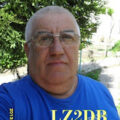
Prof. Vesselin Zaiakov — LZ3CQ (sk) / LZ3A
The hobby I fell in love with for a lifetime
A True Radio-Ham: Personal Memoirs of Prof. Vesselin Zaiakov (LZ3CQ – sk / ex LZ2WC, LZ2CQ)
In memory of Prof. Vesselin Zaiakov (LZ3CQ – sk), who left a profound legacy and made exceptional contributions to Bulgarian and international amateur radio.
I was born in Sofia in 1943, but my childhood was spent in Veliko Tarnovo. We lived near the Tsarevets fortress, where I took my first steps in electronics.
My father, Stoyan, was a schoolteacher and subscribed to „Radio“ magazine. Reading it ignited my passion. An aunt gifted me a 6K7 vacuum tube, with which I built my first radio receiver.
1. First Steps at Tsarevets and Airwave Debut (1956–1957)
In 1956, the Pioneer Palace at Tsarevets formed its first Morse telegraphy group, taught by Siyka Yancheva. Nikolay Pisarov (later LZ2JF) and I were top students in the class.
On January 7, 1957, we logged our first live contacts on the air. To practice Morse code, I built a homebrew 50Hz audio buzzer and later a code oscillator.
Boncho Vasilev introduced us to the Tarnovo Regional Radio Club. The station operated a British BC receiver, a 35W transmitter with an RL6P35 tube, and a Windom wire antenna. Kiril Nestorov became our operating mentor.
2. Regional Club LZ2KBA and Air Force Aviation
Nikolay Pisarov and I formed a contest team representing LZ2KBA. Over time, we upgraded the station’s final amplifier to a GU-81 tube for maximum power output.
During the 1958 solar cycle peak, our 50-Watt signal worked DX worldwide on AM and CW. In 1961, I entered the Air Force Officers Academy to train as a pilot. During my studies, Nikolay and I won the Bulgarian National HF Championship, earning the title „Master of Sports“.
3. Individual Callsigns: LZ2WC, LZ2CQ, and Homebrew Transceivers
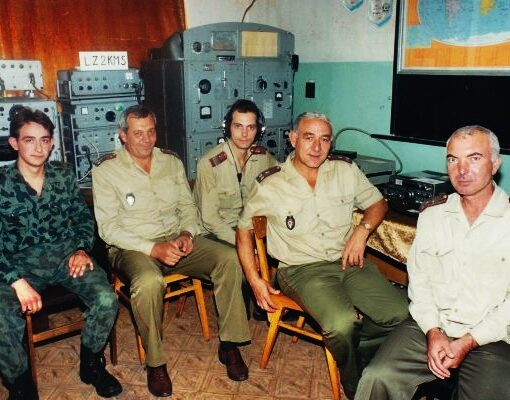
After graduating in 1966, I was issued my first personal callsign, LZ2WC. Stationed in Dobrich, station manager Dimitar Galmadiev (LZ2FA) and I claimed 3rd Place in the National HF Contest and 1st Place team in ARDF (Foxhunting).
In 1967, I became an Air Force Academy instructor and built my first homebrew HF transceiver using twin PL500 tubes. In 1972, I pursued postgraduate engineering studies and temporarily deactivated my station.
In 1976, I returned to the airwaves under a new callsign — LZ2CQ (issued by Kliment Kozhuharov, LZ1CQ). I built a hybrid UW3DI transceiver, a triple GU-50 power amplifier, and a 3-element 20m monoband beam.
4. Academic Career, VHF Pioneering, and the C4I Cyprus Project
I became an associate professor in 1982 and department head in 1984, relocating to Sofia in 1987. After 1998, together with LZ2HM and LZ1VDR, we built high-power VHF/UHF amplifiers for mountain contest expeditions.
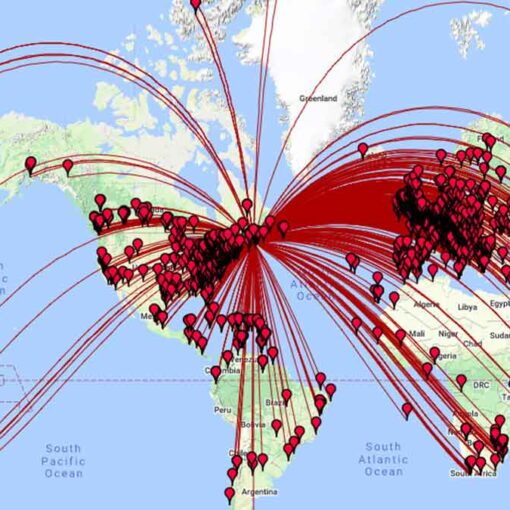
In 2006, alongside Andrey (LZ2HM) and Norman (5B4AIF), we launched a major DX contest station in Cyprus under callsign C4I. We constructed an elite contest facility featuring ACOM log-periodic arrays and Moxon beams.
By 2010, team C4I logged over 28 million points per contest, winning two major world championships and cementing its place in Bulgarian DXing history.
Autobiographical memoirs by Prof. Vesselin Zaiakov, LZ3CQ (sk) (ex LZ2WC, LZ2CQ, 5B4AIV, LZ3A) — 2012