QSL Cards: The Tradition of Confirming Radio Contacts
Exchanging QSL cards is a tradition as old as amateur radio itself. A QSL card serves as written, official confirmation of a completed contact (QSO) or shortwave listener report (SWL). The standard and globally recognized card size is 9 x 14 cm (approx. 3.5 x 5.5 inches).
While most operators print custom personal QSL cards, many radio clubs also offer template cards for their members where individual details can be added.
1. Mandatory Attributes of a QSL Card
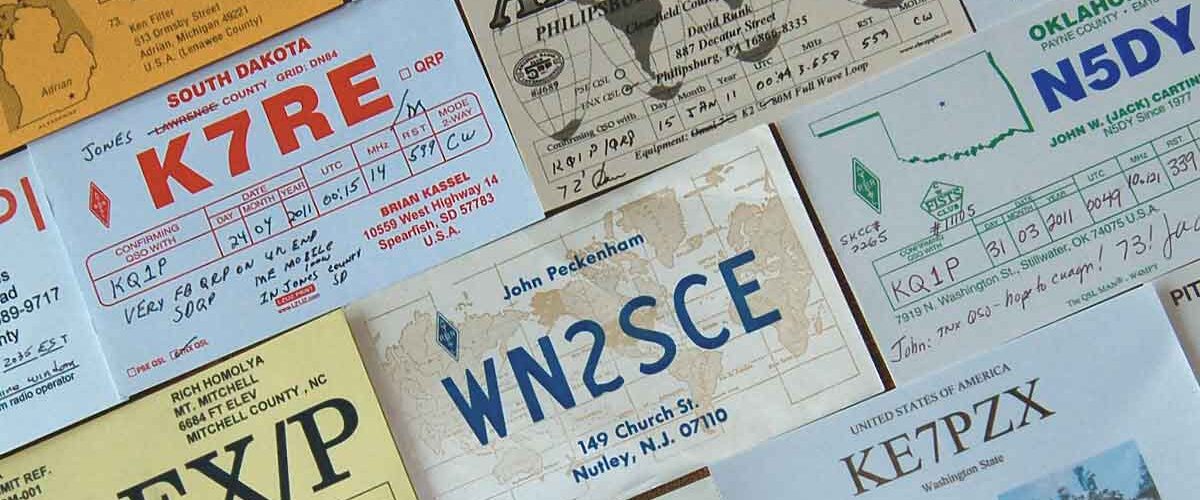
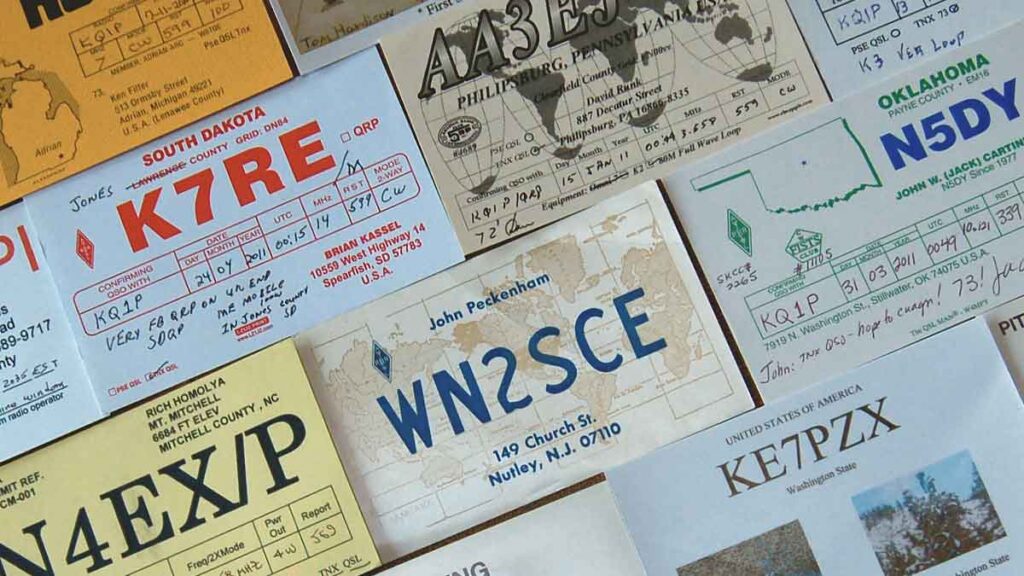
Although card design allows for great creativity, every valid QSL card must contain the following core details to be eligible for award applications:
- Your Callsign: Prominently displayed on the front and/or back.
- Mailing Address: Postal address, email, or QSL bureau routing info.
- Station Worked Callsign: Dedicated field for the recipient’s callsign.
- Date and Time of Contact: Time must always be logged in UTC.
- Band or Exact Frequency: (e.g., 20m, 14 MHz, or 14.205 MHz).
- Mode of Operation: (e.g., CW, SSB, FT8, FM).
- Signal Report: Based on the relevant scale (RS, RST, RSV, RSQ).
- QTH Locator (Grid Square): Mandatory for VHF/UHF contacts (e.g., KN12PQ) and strongly recommended for HF and mobile operating.
Many hams include additional useful station details — such as QSL Manager info, transceiver equipment, output power, antenna types, and a brief personal greeting (e.g., 73 and signature).
2. Standard Mode Abbreviations for QSL Cards and Logs
Standardized abbreviations are used on QSL cards and in station logs to designate emission classes:
| Abbreviation | Emission Type / Description |
|---|---|
| CW | Telegraphy (Morse Code) |
| SSB / PHONE | Single Sideband / Voice communications (incl. FM, AM) |
| DATA | Data transmissions — telemetry, telecommand, computer data |
| IMAGE | Facsimile and Television modes (SSTV, ATV) |
| MCW | Modulated Continuous Wave (Tone telegraphy) |
| FM / AM | Frequency / Amplitude Modulation |
| RTTY | Radioteletype / Direct printing telegraphy (incl. AMTOR) |
| SS | Spread Spectrum |
| TEST / PULSE | Test transmissions / Pulse modulation |
3. QSL Exchange Methods
QSL cards are routed through several primary channels:
- Via QSL Bureau: The most economical method. Almost all national IARU member societies operate QSL bureaus for their members.
- Direct: Sent via postal mail directly to the operator’s address (often including a Self-Addressed Envelope — SAE/SASE).
- Via QSL Manager: Common for DXpeditions or high-volume stations. Manager information is given during the contact or looked up online (e.g., QRZ.com).
- Electronic QSL (eQSL / LoTW): Digital confirmation platforms such as ARRL’s Logbook of The World (LoTW) and eQSL.cc.