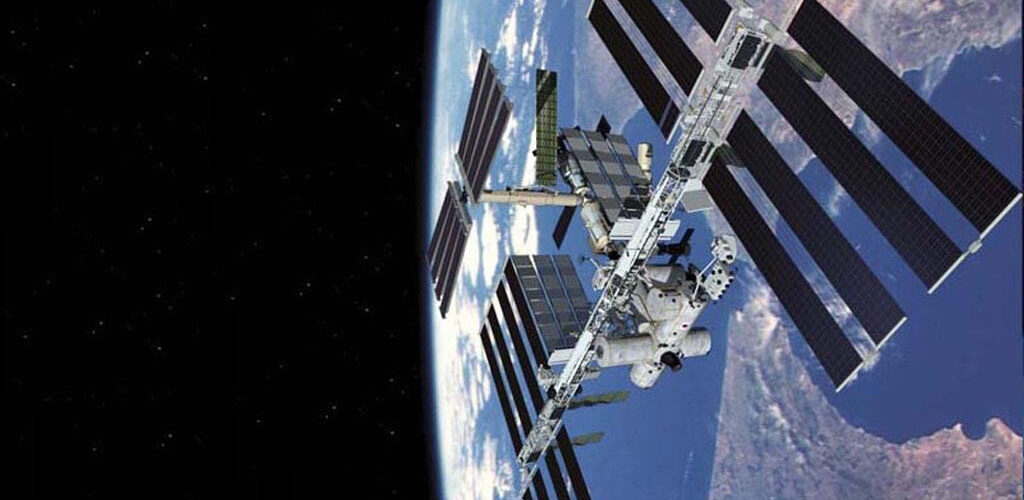
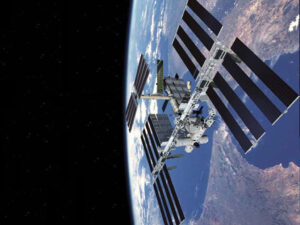
Artificial Earth Satellite (Sputnik)
World Aviation and Cosmonautics Day
April 12 — World Aviation and Cosmonautics Day: History and Bulgaria’s Cosmic Legacy
On April 12, the global community celebrates World Aviation and Cosmonautics Day. On this date in 1961, at 09:07 AM Moscow time, the Vostok 1 spacecraft launched from the Baikonur Cosmodrome carrying Yuri Alekseyevich Gagarin — the first human in space. His historic 108-minute single orbit around Earth ushered humanity into the space age.
1. Milestones in Space Exploration
- October 4, 1957: Launch of Sputnik-1 (USSR), the world’s first artificial satellite.
- November 3, 1957: Sputnik-2 carries Laika the dog, the first living creature in Earth orbit.
- August 19, 1960: Belka and Strelka aboard Sputnik-5 become the first living beings to safely return from space.
- April 12, 1961: First human spaceflight by Yuri Gagarin (USSR).
- March 18, 1965: First extravehicular activity (spacewalk) by Alexei Leonov (USSR).
- July 21, 1969: First human footsteps on the Moon by Neil Armstrong (Apollo 11, USA).
- April 19, 1971: Launch of Salyut 1 (USSR), the world’s first space station.
- April 12, 1981: Maiden flight of the Space Shuttle Columbia (USA).
2. Bulgaria’s Space History: A Leading Space Nation
Bulgaria established itself as one of the world’s pioneering spacefaring nations during the 20th century through astronaut missions, space science, and onboard technology:
First Bulgarian Cosmonaut — Georgi Ivanov (1979)
Under the international Interkosmos program, Georgi Ivanov launched aboard Soyuz-33 on April 10, 1979, alongside commander Nikolai Rukavishnikov. Following a main engine failure that prevented docking with the Salyut-6 station, the crew successfully executed a harrowing manual ballistic re-entry, landing safely on Earth.
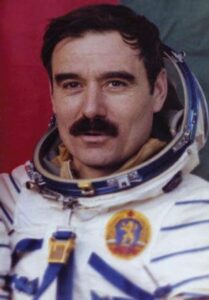
Georgi Ivanov — First Bulgarian Cosmonaut
Second Bulgarian Cosmonaut — Aleksandar Aleksandrov (1988)
On June 7, 1988, Aleksandar Aleksandrov launched aboard Soyuz TM-5 to the Mir space station. During the mission, he conducted the extensive Bulgarian „Shipka“ scientific program, executing 56 successful experiments using Bulgarian-designed instruments.
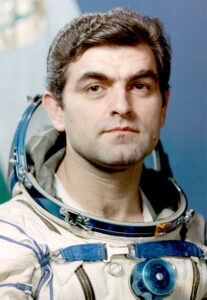
Aleksandar Aleksandrov — Second Bulgarian Cosmonaut
3. Bulgarian Innovations: „Bulgaria-1300“, „SVET“ Greenhouse, and Space Food
- Bulgaria-1300 Satellite (1981): Launched into orbit fully equipped with Bulgarian scientific payloads for ionospheric and space physics research.
- SVET Space Greenhouse: The world’s first automated space greenhouse capable of growing plants through complete plant-growth cycles in microgravity (operated on Mir).
- Space Food Pioneering: Bulgaria became the third nation in the world (after the USA and USSR) to develop specialized freeze-dried (lyophilized) space food, creating long-shelf-life meals including traditional yogurt, fruits, and nuts.
- Lyulin Radiation Detectors: Bulgarian-developed „Liulin“ dosimeters continue to be used aboard the International Space Station (ISS) for space radiation monitoring.
4. First Bulgarian Military Satellite Link (1987)
On May 24, 1987, the Bulgarian Armed Forces conducted their first historical military satellite communication link. The transmission connected the General Staff satellite terminal in Sofia (headed by Anton Ivanov) with the Naval terminal in Varna (headed by Emil Popov).
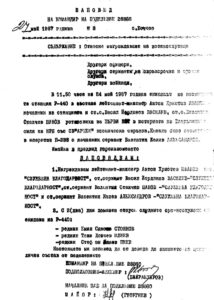
Official Military Order for the First Satellite Link
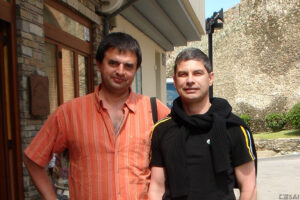
Anton Ivanov and Emil Popov