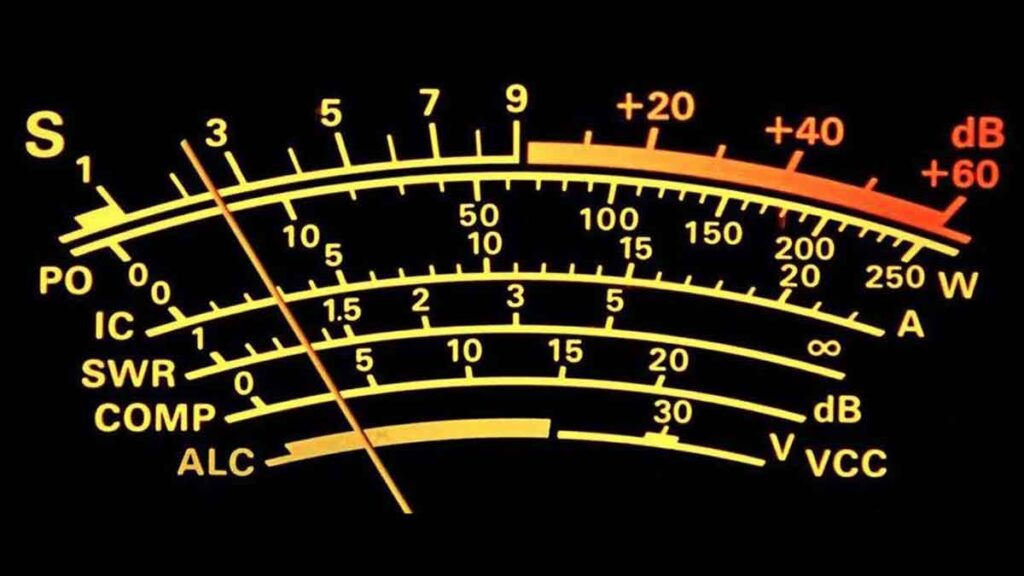
RS, RST, RSV, RSQ Report (Score)
Signal Reporting Standards in Amateur Radio: RS, RST, RSV, and RSQ Systems
Accurate signal reporting is a vital component of amateur radio communications. Depending on the mode used — Phone, CW, SSTV, or Digital — operators exchange standardized reports evaluating readability, signal strength, and technical quality.
1. RS Reporting for Phone Modes (SSB / FM / AM)
For voice contacts, operators exchange an RS report consisting of two numbers:
- R (Readability): Evaluated on a scale from 1 to 5.
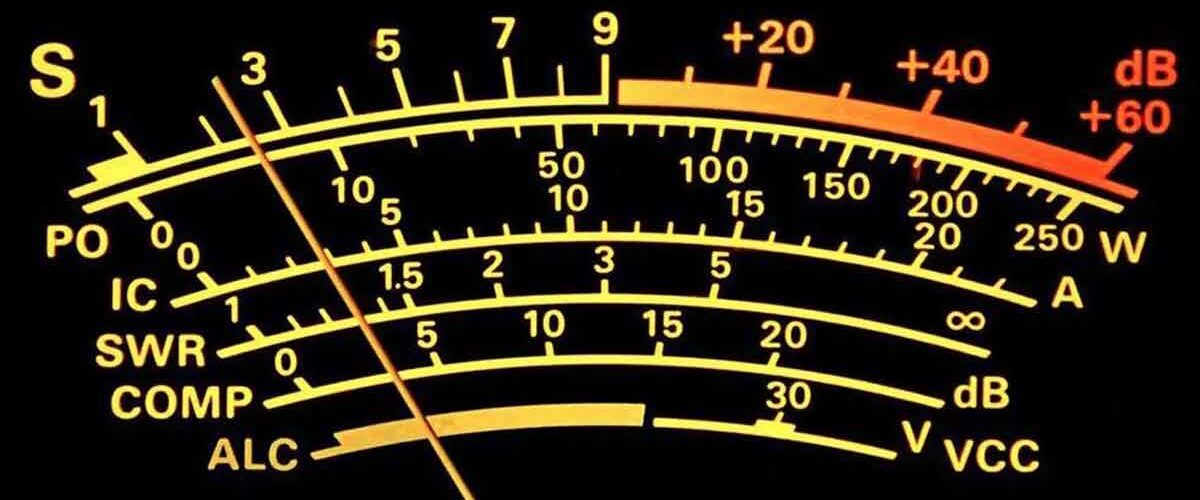
- S (Signal Strength): Evaluated on a scale from 1 to 9 (via S-meter or subjective listening).
| Readability (R1 – R5) | Signal Strength (S1 – S9) | ||
|---|---|---|---|
| R1 | Unreadable | S1 | Faint, barely perceptible signal |
| R2 | Barely readable | S2–S4 | Very weak to fair signal |
| R3 | Readable with considerable difficulty | S5–S7 | Fairly good to good signal |
| R4 | Readable with practically no difficulty | S8 | Strong signal |
| R5 | Perfectly readable | S9 | Extremely strong signal (S9+10dB, etc.) |
When operating phone, do not mix scales.
QRK (readability) ranges from 1 to 5, while QSA (signal strength) also ranges from 1 to 5. Saying „QSA 9“ is technically inaccurate. Simply state „RS 59“.2. RST Reporting for CW Telegraphy
For Morse code contacts, a third digit is added — T (Tone) on a scale from 1 to 9, assessing the purity of the CW tone.
| Rating | Modern Practical Interpretation of CW Tone (T) |
|---|---|
| T1 – T3 | Extremely harsh, unfiltered AC hum or wild oscillation (severe signal defect). |
| T5 – T7 | Distinct to slight AC hum component (power supply ripple or over-modulation). |
| T8 | Nearly perfect tone with minor traces of ripple. |
| T9 | Perfect, clean sinusoidal CW tone with no distortion. |
CW Signal Defects (Chirp & Clicks): Historically, suffixes like C (for chirp) and K (for key clicks) were appended (e.g., 579C). Modern convention recommends spelling out defects: CHIRP or CLICKS.
3. RSV Reporting for Slow-Scan Television (SSTV)
For image and facsimile transmissions, the RSV system is used, where V (Video) rated 1 to 5 measures image clarity:
| Video Rating | Visual Quality Characteristics (V) |
|---|---|
| V1 | Severe distortion and noise; image unreadable. |
| V2 – V3 | Heavy to moderate interference; callsign barely discernible. |
| V4 | Good image quality with minor noise. |
| V5 | Flawless image reception. |
4. RSQ Reporting for HF Digital Modes (PSK31, Digital)
For HF digital modes, conventional RST reports lack precise meaning. The **RSQ (Readability, Strength, Quality)** framework provides meaningful technical data:
| Parameter | Scale | Technical Meaning |
|---|---|---|
| Readability (R) | R1 – R5 | Percentage of decoded text accuracy (R5 > 95%, R4 = 80%, R3 = 40%, R1 = 0%). |
| Strength (S) | S1 – S9 | Signal-to-Noise Ratio (SNR) observed on the waterfall spectrum. |
| Quality (Q) | Q1 – Q5 | Spectral purity (Q5 = clean signal, Q1 = splatter and excessive sidebands due to over-modulation). |