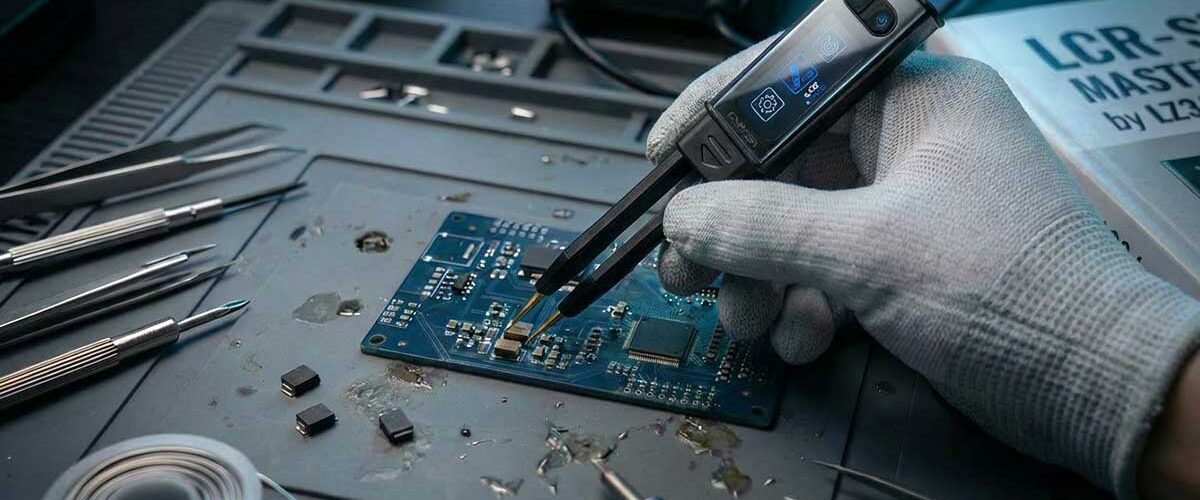
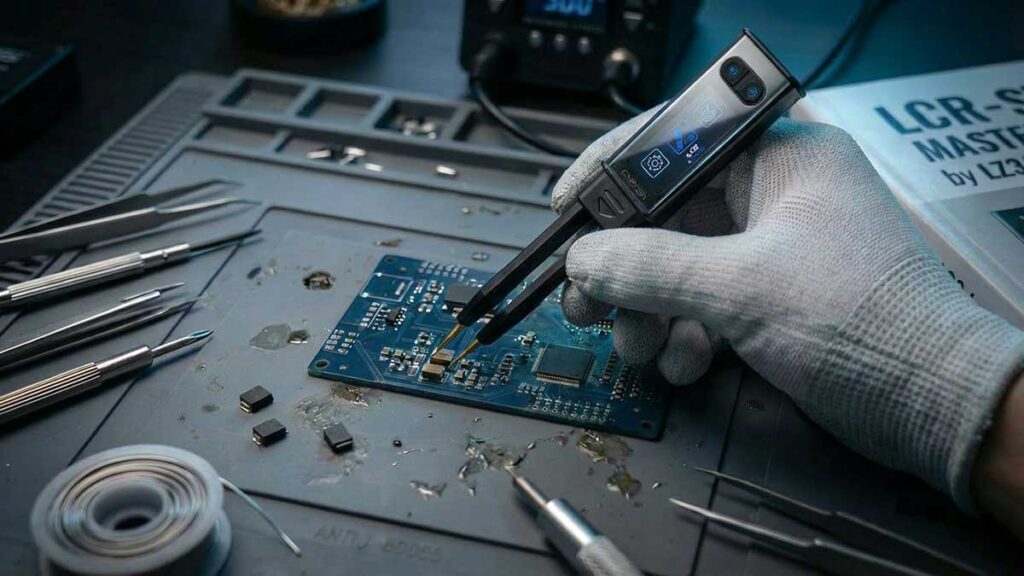
FNIRSI LCR-ST2 Master Class: A Practical Guide to Precise Measurements
Unlock the full potential of the FNIRSI LCR-ST2 Smart Tweezers with my practical tips and experience.
After going through the ins and outs of DeepVNA together, FTX-1F and FTDX10, it’s time to pay attention to a tool that has quickly become an indispensable assistant on my workbench – the FNIRSI LCR-ST2 smart tweezers.
This is my fourth book in the „Master Class“ series. In it, I decided to share not only dry technical data, but also real diagnostic methods that I use every day. In the world of miniature SMD components, a good tool is just the beginning. The real magic happens when you know how to decipher the „truth“ that the numbers on the screen are trying to tell you.
What will you find in this „Master Class“?
The manual is structured to take you from the first turn-on to the expert analysis of complex faults. In it I reveal:
- Dynamic Parameter Control: How to use the “hidden” joystick functions to see Q-factor, Impedance (Z) and phase shift directly on the main screen.
- Capacitor Diagnostics: My “Golden Rule” for measuring ESR (Rs) at 100kHz and why capacitance is often not the most important metric.
- Short Circuit Locator: The milliohm technique I use to find a blown component on a power rail without unsoldering everything.
- Frequency Analysis (SCAN): How to understand the behavior of coils and transformers in real operating conditions.
“Where “Numbers meet truth” is the motto for this guide.
My goal is to give you confidence in every measurement you make.
This book is the perfect complement to my previous „Master Classes“ for DeepVNA, FTDX10 and FTX-1F for practicing radio amateurs.
📥 Download the book in PDF format
You can download the full version of the book „FNIRSI LCR-ST2 MASTER CLASS Complete guide to precise measurements with LCR-ST2“ completely free of charge from the link below:
👉 [Download PDF: FNIRSI LCR-ST2 MASTER CLASS – LZ3AI]
Support the shared experience
„This manual is my contribution to the amateur radio community and will always be free to share. If the information in it was useful to you and you want to express your support for my work, you can buy me a cup of virtual coffee via the link below. Any such recognition motivates me to continue sharing practical advice and new ones on the site. Thank you and 73! “ — Tony, LZ3AI
Friends, creating these guides takes hundreds of hours of testing, researching, and describing every feature. If you find my work useful and it has helped you save time or solve a difficult repair, you can express your gratitude and support my future projects. Your support is the „fuel“ that gives me the strength to continue sharing knowledge with the amateur radio community.
Buy me a coffee
Your feedback is important!
Amateur radio is a hobby of shared experience. Do you use different settings for your device? Do you have a „secret recipe“ for easily measuring different components without removing them from the board?
I would be glad if you share your opinions, corrections or personal settings in the comments below the article or over a cup of coffee. Let’s make this guide even more useful for the amateur radio community!
73 and see you on the air!
Tony, LZ3AI
About the author (LZ3AI): „I believe that sharing experience is the basis of the amateur radio movement. My „Master Classes“ focus on the practical side of things to help you get the most out of your equipment.“
Literature and sources used
In preparing this „Master Class“ I relied on:
- FNIRSI Technology Co., Ltd. – Official documentation and specifications of firmware v1.5.1.
- H. W. Ott – “Noise Reduction Techniques in Electronic Systems”.
- Galanto Electronic Library – Materials for ESR diagnostics and internal resistance of batteries.
- Personal laboratory practice – Dozens of hours of tests with reference components.