
Digital Operating Modes
Digital operating modes have widely entered the amateur radio hobby. Although the boom of the Internet initially reduced overall activity, digital modes have gradually restored their appeal with new protocols and gateways connecting radio networks to the Internet.
CW (Morse Code) can also be considered a digital mode because information is binary-encoded (signal present/absent). However, as a fundamental traditional mode, it is covered separately.
Classification of Digital Modes
For ease of reference, the primary digital modes are categorized into several key groups based on their purpose and frequency bands used:
1. HF Text & Data Modes
- RTTY (Radio Teletype): One of the oldest digital modes utilizing Frequency Shift Keying (FSK), widely used in contests for fast text exchange.
- PSK31: A popular narrowband mode for real-time text chatting that uses Phase Shift Keying and occupies a tiny 31 Hz bandwidth.
- AFSK (Audio Frequency Shift Keying): A technique for transmitting digital data by modulating audio tones through standard AM/FM/SSB transceivers.
- AMTOR: An evolution of RTTY featuring Error Correction and Automatic Repeat Request (ARQ) for reliable communication over noisy channels.
- G-TOR: An HF digital mode featuring dynamic data rate adjustment and error correction for efficient data transfer.
- CLOVER, CLOVER II, CLOVER 2000: Multi-tone HF modes offering high spectral efficiency for data transmission under changing propagation conditions.
- MFSK / Olivia: Multi-tone digital modes that are exceptionally resilient to multipath propagation, fading, and high HF noise levels.
- SCAMP & RDFT: Software-based digital modes designed for reliable text and file transfer via a standard computer sound card.
2. Weak-Signal & DX Modes
- FT8, FT4, FT2: Highly popular time-synchronized protocols designed for weak-signal contacts (FT8/FT4 are part of the WSJT-X suite by Joe Taylor K1JT).
- JS8Call: Derived from FT8, designed specifically for free-text conversational keyboard-to-keyboard communication under ultra-weak signal conditions.
- JT65 / JT9: Protocols engineered for extreme weak-signal propagation well below the noise floor, heavily used on HF and Earth-Moon-Earth (EME) communication.
- MSK144: A high-speed data protocol optimized for VHF Meteor Scatter communications.
3. Digital Voice Modes
- DMR (Digital Mobile Radio): A two-slot TDMA digital standard offering high audio quality and vast network connectivity via systems like BrandMeister.
- C4FM (System Fusion): Yaesu’s digital voice and data protocol for VHF/UHF using 4-level FSK modulation.
- D-STAR: An open digital voice and data standard developed for Icom and Kenwood radios with global IP routing capabilities.
- FreeDV: An open-source digital voice protocol operating at low bitrates over standard HF SSB transceivers.
- Vertex (Digital Voice): Specialized digital voice and data radio standards used in Vertex Standard transceivers.
4. Packet, Network & Tactical Systems
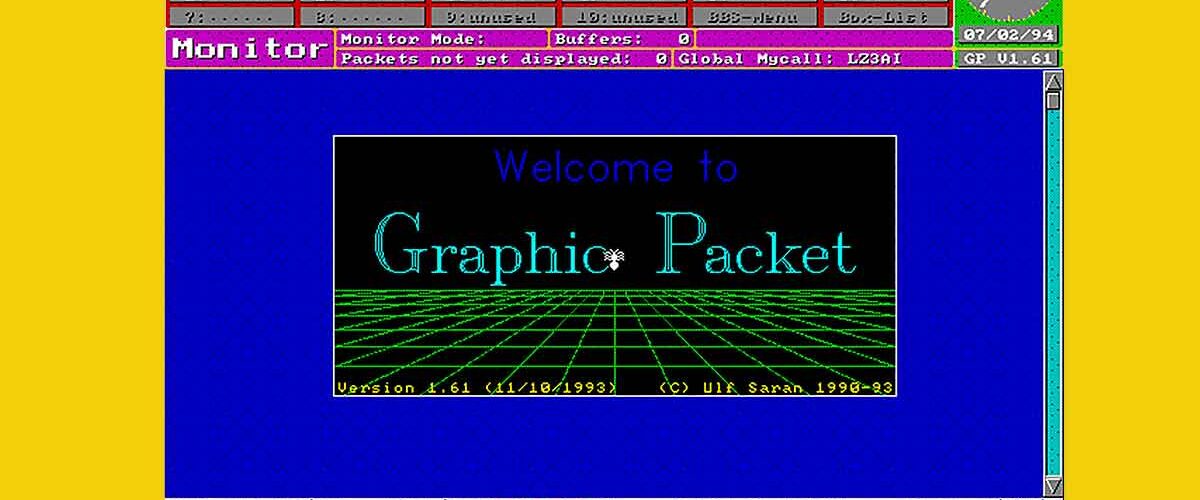
- PACKET Radio: A packet-based network protocol (AX.25) used for file transfer, messaging, and building amateur radio packet networks.
- APRS (Automatic Packet Reporting System): An AX.25-based system for real-time tactical digital communication of position, weather, and text data.
- PACTOR, PACTOR II, PACTOR III: Proprietary robust HF data protocols with advanced error correction, primarily used for Winlink email over HF.
- Winlink 2000: A global radio email network providing email transfer over HF and VHF without requiring a local Internet connection.
- ALE (Automatic Link Establishment): A standard protocol for automatically finding and setting up the best HF frequency for a radio link.
5. VoIP & Internet Gateways
- EchoLink: A VoIP system connecting amateur radio stations and repeaters worldwide using the Internet via computers or smartphones.
- eQSO & VoIP Variants: Internet-based voice communication systems linking radio nodes and PC clients.
Since each of these digital modes has unique characteristics and varying levels of popularity, they will be examined individually in detail.