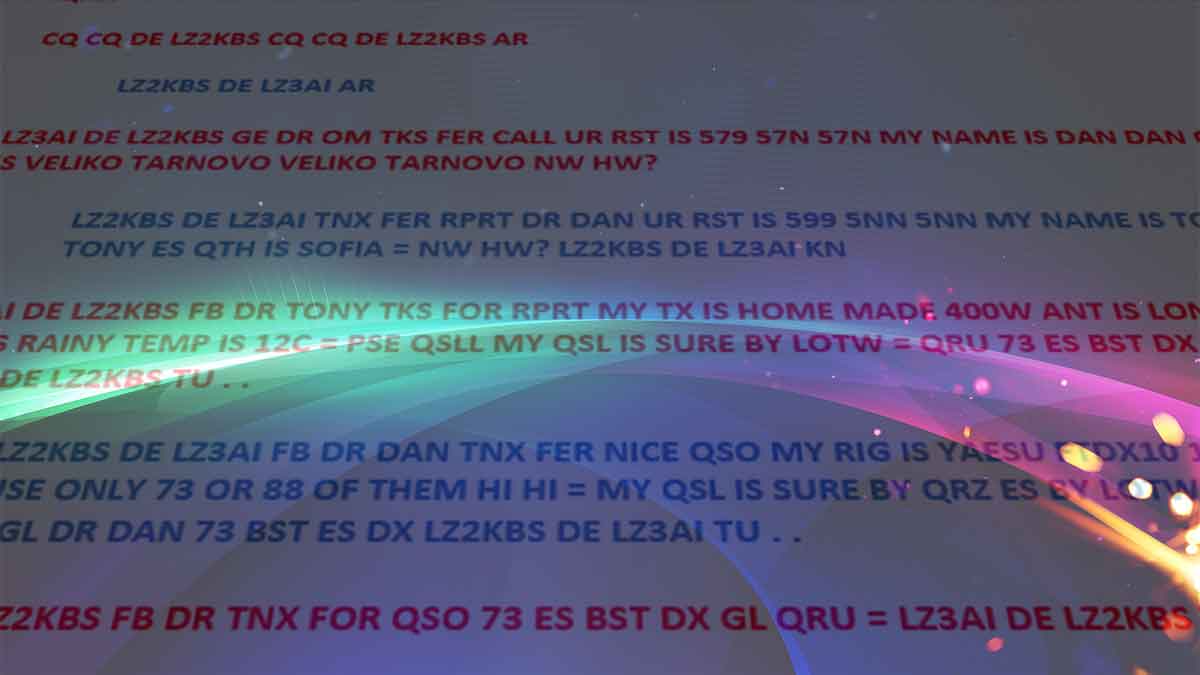
CW QSO
CW Operating Procedures: Prosigns (AR, K, KN, SK), RST Tone Scale, and Quick BK Breaks
Precise use of ending codes (prosigns) in Morse code prevents confusion, errors, and unnecessary delay on the air. This guide details the proper usage of AR, K, KN, SK, and CL, along with modern RST tone reporting.
1. Ending Codes when Answering: AR vs. K
When answering a CQ call from another station (e.g., W1ZZZ), you can finish your transmission with either AR or K:
AR(sent as a prosign without spacing) means „End of transmission“. It is safer because a single letterKplaced too close to your callsign might be misread as part of your call.Kmeans „Over to you“.
Important: During an ongoing QSO, end every regular turn with
K (or KN). Never send redundant combinations like AR K or AR KN. Avoid appending PSE K or PSE KN.2. The Tone (T) Parameter in RST Reports
In CW operating, the signal report consists of three numbers: R (Readability 1-5), S (Signal Strength 1-9), and T (Tone Quality 1-9).
Official Tone Scale (W4NRL / IARU 1995)
| Report | Signal Description |
|---|---|
| T1 | 60 Hz (or 50 Hz) hum, extremely rough and broad. |
| T2 | Very rough AC hum, harsh signal. |
| T3 | Rectified AC hum, non-filtered. |
| T4 | Rough note, some traces of filtering. |
| T5 | Filtered AC, but strongly ripple-modulated. |
| T6 | Filtered tone, distinct trace of ripple modulation. |
| T7 | Near-clean tone, slight trace of modulation. |
| T8 | Near-perfect tone, minor traces of modulation. |
| T9 | Perfect tone, clean sine wave without distortion. |
Modern Practical Use
Today, operators rely on a few practical benchmarks:
- T1: Heavily modulated, extremely rough signal (means: get off the air and fix your rig!).
- T5: Very noticeable AC ripple (often due to poor power supply regulation).
- T8: Slight, barely noticeable AC component.
- T9: Perfect, undistorted sine wave.
Note: To report signal defects like chirp or key clicks, spell out words like CHIRP or CLICKS as part of your report rather than appending outdated letter codes.
3. Summary of CW Prosigns
| Prosign | Meaning | Usage |
|---|---|---|
| AR | End of transmission | Used at the end of CQ calls or initial station calls. |
| K | Over to you | Used at the end of an over during a contact. Anyone may answer. |
| KN | Over ONLY to you | Used when calling a specific station during pileups or interference. Prohibits breaks. |
| SK | End of contact (QSO) | Used at the very end of a QSO. |
| SK CL | End of QSO + Closing station | Used when shutting down the station after the contact. |
| AR K / SK AR | Incorrect combinations | Do NOT use! These contain redundant or conflicting signals. |
4. Example of a Standard Beginner CW QSO
QRL?
QRL?
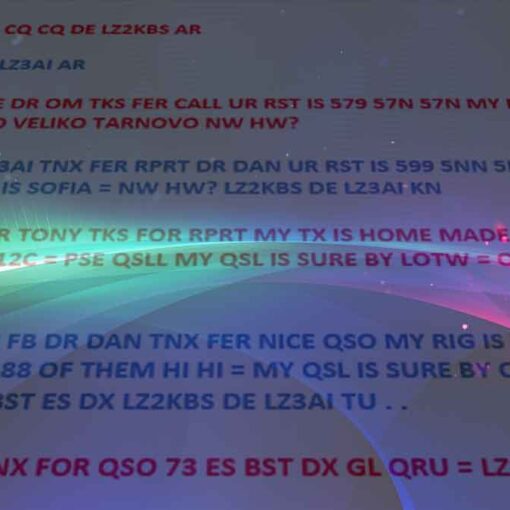
CQ CQ G4ZZZ G4ZZZ CQ CQ G4ZZZ G4ZZZ AR

G4ZZZ DE ON6YYY ON6YYY AR

ON6YYY DE G4ZZZ GE TKS FER CALL UR RST 579 579 MY NAME BOB BOB QTH HARLOW HARLOW HW CPY? ON6YYY DE G4ZZZ K

G4ZZZ DE ON6YYY FB BOB TKS FER RPRT UR RST 599 599 NAME JOHN JOHN QTH NR GENT GENT G4ZZZ DE ON6YYY K

ON6YYY DE G4ZZZ MNI TKS FER RPRT TX 100 W ANT DIPOLE AT 12M WILL QSL VIA BURO PSE UR QSL TKS QSO 73 ES GE JOHN ON6YYY DE G4ZZZ K

G4ZZZ DE ON6YYY ALL OK BOB HERE TX 10 W ANT INV V AT 8M MY QSL OK VIA BURO 73 ES TKS QSO CUL BOB G4ZZZ DE ON6YYY SK

73 JOHN CUL DE G4ZZZ SK
5. Rapid Break-In Procedures (BK and AS)
- Break-in with BK: For rapid exchanges without repeating full callsigns at every turn, use
BK.Example:..UR NAME PSE BK→BK NAME JOHN JOHN BK - Pausing with AS: If an intruding station calls while you are in a QSO, send prosign
AS(.-...) to signal „Wait“ or „Stand by“.