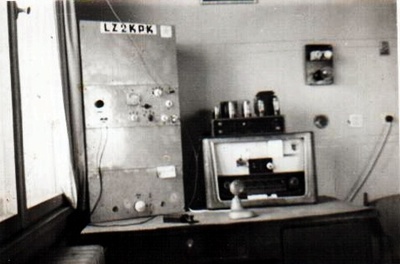
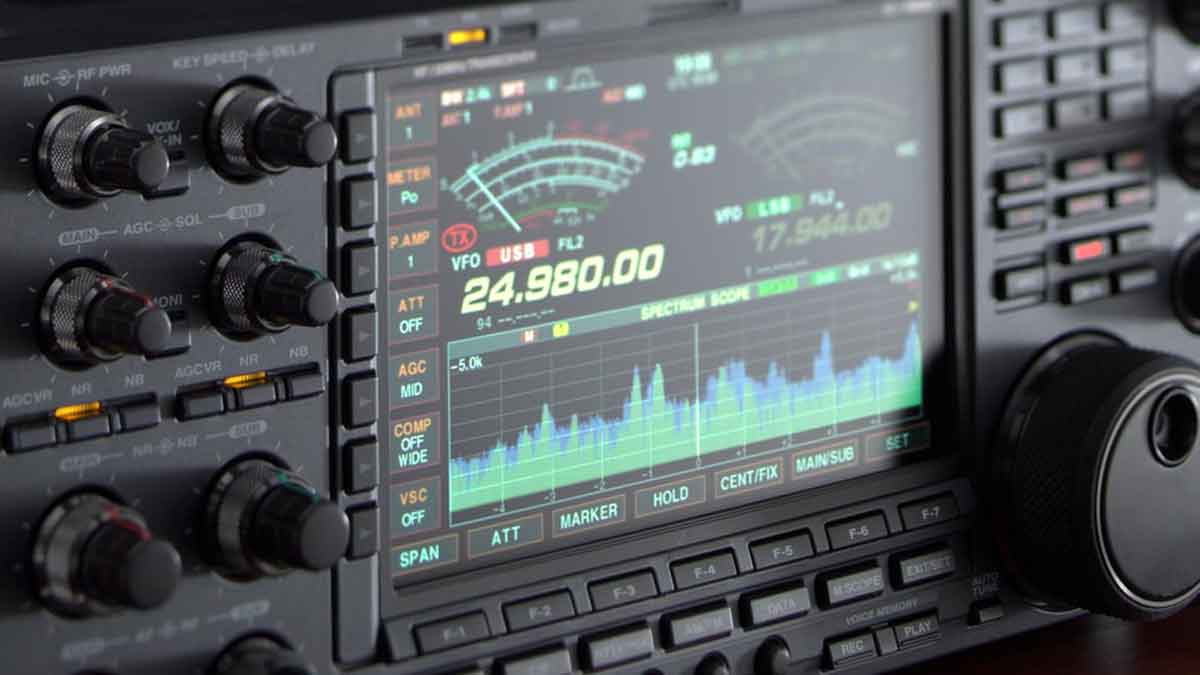
LZ2KAC / LZ2KBA
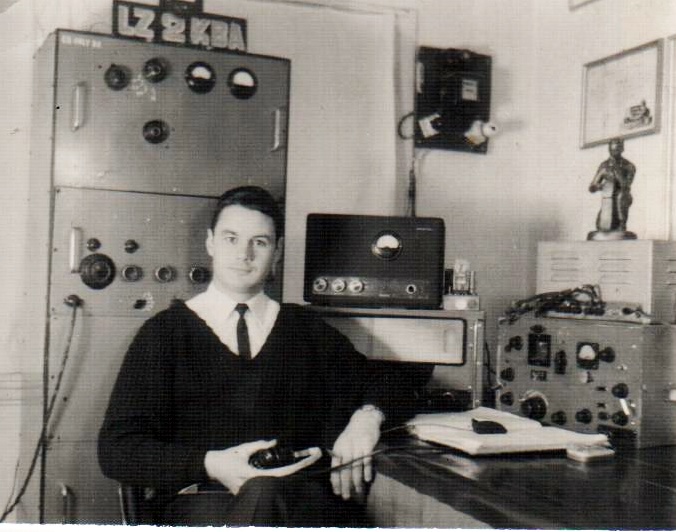
LZ2KAC /after 196…2/3??/= LZ2KBA
Anniversary initials:
LZ13CWT
LZ40KBA
LZ2KAC
THE BEGINNING
In 1946, the “Union of Radio Technicians in Bulgaria” was established, which later transformed into the “People’s Union for Sports and Technology” and then into the “Voluntary Organization for Defense Assistance”
This marked the true beginning of an organized radio amateur movement in Bulgaria. One by one, clubs, courses, and training units in radio engineering, radio design, and radio communications began to spring up all over the country. In 1952, the first collective radio stations began to operate – LZ1KAB in Sofia, LZ2KAC in Tarnovo, and others.
The first exam for class “B” was held by an interdepartmental commission on October 25, 1951. This was a very important event, because after the first pass an exam, permits for construction and permanent use of club radio stations can now be issued. Until now, only temporary permits have been issued to radio amateurs class “C” for some notable dates or for the participation of radio stations in competitions. And such are currently only LZ1KAB and LZ1AA, officially reopened in 1951, now as a radio station of the “Radio Communications” department of the Central Committee of the Bulgarian Radio and Television Association. Immediately after the exam, documents are submitted for construction of the Turnovo station LZ2KAC, the first outside Sofia….
On May 27, 1952, in Turnovo they receive a permit for construction of a transmitter for LZ2KAC. Kiril Nestorov is confirmed as the chief, and Nikolay Yordanov, Todor Borisov, Evgeniya Stoeva are being trained as operators, until now only listeners.
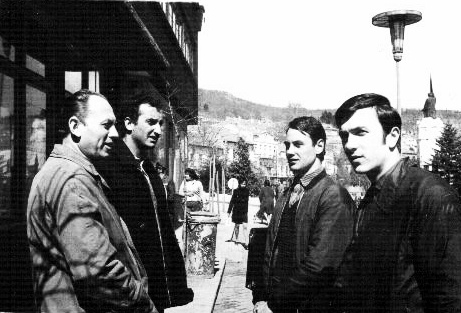
Kiril Nestorov: “Since 1949. I started working at the National Radio and Television Station as a storekeeper, then a milling machine operator. But I was always drawn to the radio. The material base at the beginning was a few keys, a few headphones and a radio receiver set. At a district competition in 1951, I became the first with 60 characters. I was sent to Sofia for class “C”. Dimitar Petrov taught us codes and abbreviations. When I returned, I was appointed as an instructor.
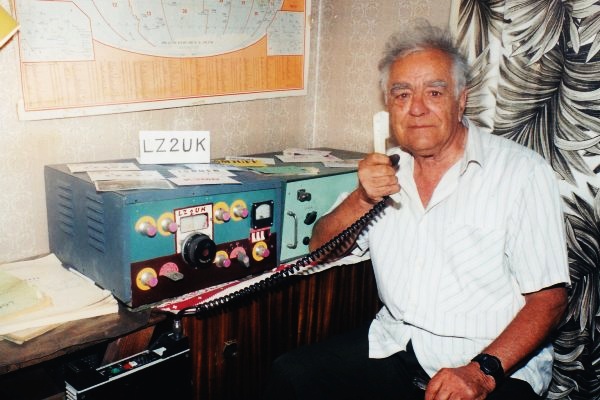
We formed a council for the club. The deputy commander for the political part of the then Military School headed our council. We used such activists back then. On February 1, 1952. I was appointed head of a radio station in the OK of DOSO, but there was no radio club yet. And since there was no club, what kind of head would I be. My first job was to equip two small rooms that were given to us for a design and telegraph room. I submitted documents for a club radio station. I named it LZ2KAC. There was already LZ1KAB, the next in line was supposed to be “KAS”. Such was the example from other people’s democratic countries. But some comrades named their radio stations after their cities. For example, LZ2KST, but Stalin is no longer Stalin, it is Varna. So we will perpetuate Stalin’s name. I considered it incorrect and started in order Gabrovo – LZ2KAD, Elena – LZ2KAE, Gorna Oryahovitsa – LZ2KAF, etc. I became the godfather of all of them. ”
I considered it incorrect and started in order Gabrovo – LZ2KAD, Elena – LZ2KAE, Gorna Oryahovitsa – LZ2KAF, etc. I became the godfather of all of them. ”
Memoirs of Kiril Nestorov
The first radio engineering teachers in the Tarnovo “Radio Amateur Committee” were Panayot Nikolov and Geranliev – both employees at the post office. Geranliev would later describe this time as: “A time of negligible material and enormous moral basis”, and Nikolov would add: “A time when, in our desire to teach others, we taught ourselves”. And indeed – a pair of headphones, a buzzer with a battery, several useless relays, radio tubes with reduced emission, coils, two or three books from the magazine “Radiosvyat”, a tattered textbook on radio engineering from Getov… and nothing else – this was the entire material part of the radio amateur circles held in schools. Some of the “charkovets” were donated by another teacher, Stefan Cholakov, and the radio design boards were made by the radio engineering instructor Nikolay Penev. The most prominent students of the clubs are Marin Slavchev, Veselin Tsonev and Vladimir Marinov.
“I do not know what the beginnings of other radio clubs in the country are, but for the Tarnovo club I firmly claim that it was illuminated by the light of unusual enthusiasm, of dedication to the amateur radio business”.
On 11.IV.1952, ten people – three postmen, one officer, two radio technicians, two employees and two students founded the “Tarnovo District Radio Club” at the OK of DOSO. Shortly after this date, the club’s members were already 41.
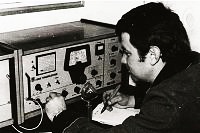
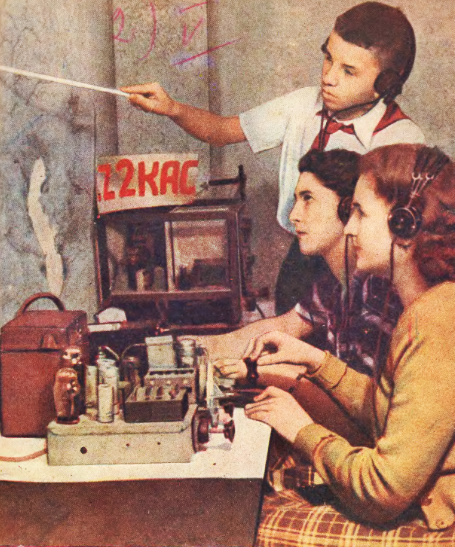
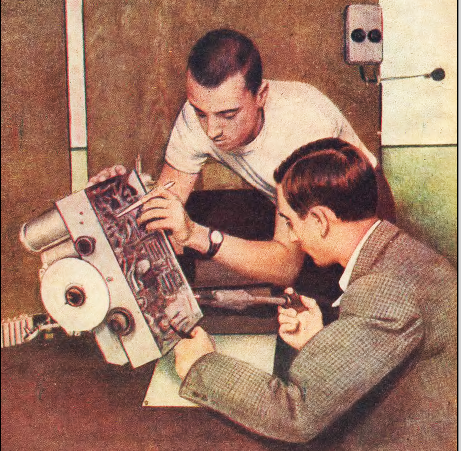
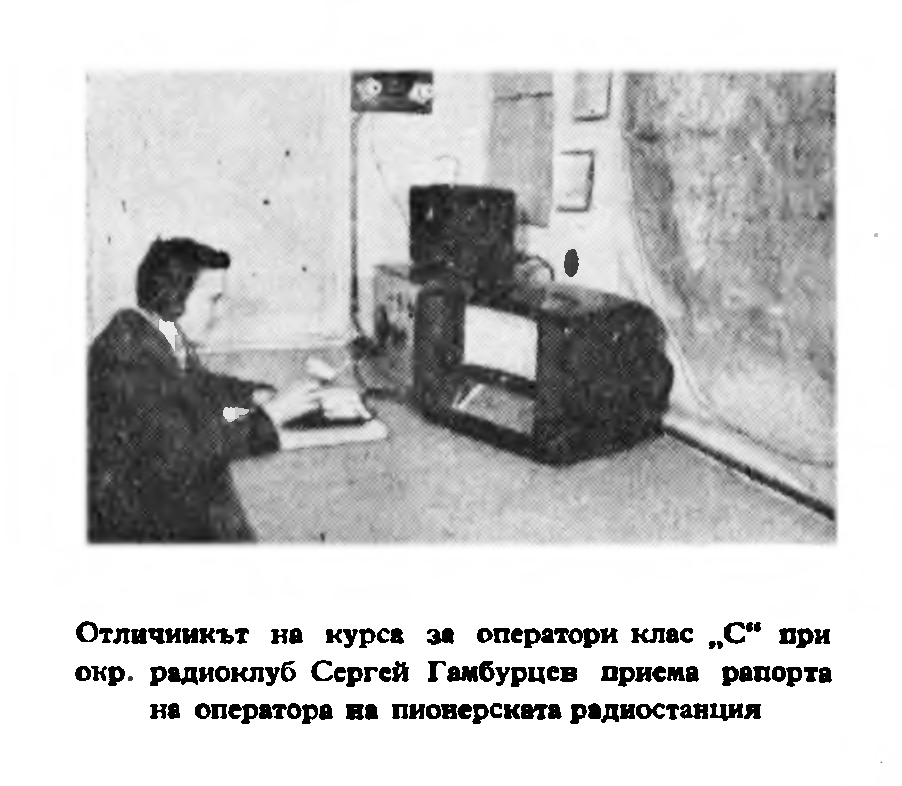
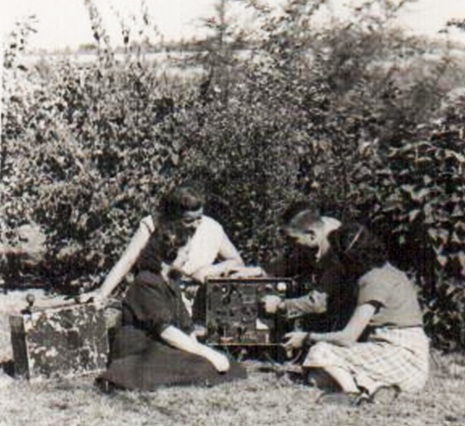
In the spring of 1952, Kiril Nestorov, N. Yordanov, T. Kolarov, Marin Slavchev and Veselin Tsonev prepared the chassis of the club transmitter with files and sheet metal shears. The brackets and sheets were given to them by Krastyo Radoslavov – the director of the “Chervena Zvezda” factory in the town of Debelets. Under the leadership of K. Totev, Kiril Nestorov – an amateur radio designer and Kosyu Bostandzhiev – an experienced professional radio technician, they assembled the transmitter according to Boris Konyarov’s scheme. Around these “old masters” constantly hovered 16-year-old Nikola Yordanov and Todor Kolarov – guys for everything – wind this coil, give me a soldering iron, go to the post office for a GV6 radio tube…. The assembly progressed slowly, due to the constant lack of one or another “chark”, which must be found immediately. During the construction of the transmitter, the listening activity of the future operators intensified. The most active were Todor Borisov and Nikolay Yordanov. On 27.V.1952, the permit for LZ2KAC was received. In the summer, the transmitter was finally completed and on 5.VIII.1952 Nestorov stood at the switch and almost all day tried to make connection by calling CQ. But something is not working… Kosyu Bostandzhiev makes a light joke – he goes downstairs and calls him from an oscillator with a Ukrainian initial from Kiev… . Euphoria. Only at 18:30 they establish the first radio contact with UA3KFB from which they receive a relatively good rating of 569. Then Nikolay Yordanov and Gramatikov sit on the station. Subsequently, the operators of LZ2KAC are Evgeniya Stoeva, Tsanka Gencheva with class “C”, Vladimir Marinkov, Todor Kolarov and the first pioneer operator in the country class “C” Tosho Tsankov Mitev.
New people in the club
1953 was characterized by an increase in the material base, an increase in the qualities of the club members, the station operators and a slight increase in massification. New people also arrive at the club, attracted by the club radio station’s activities.
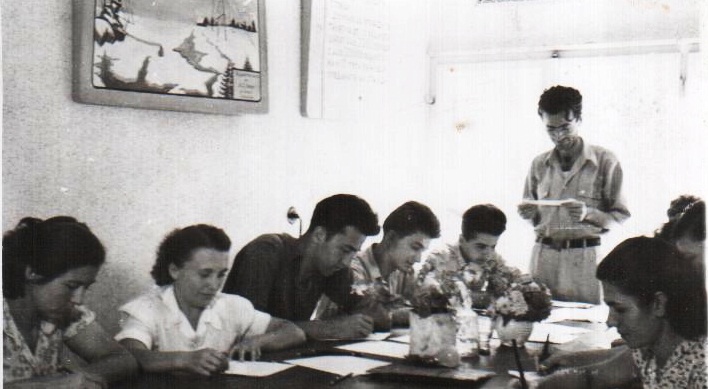
For example, a lively, smiling young man comes from Gabrovo – Boncho Vassilev. Having graduated from secondary technical school, under the expert guidance of Eng. Konyarov he has become an experienced instructor in radio engineering and amateur radio. He immediately organizes courses in amateur radio in various enterprises – in the carpentry cooperative, in the “Hristo Kamburov” Industrial Training Institute, in the district hospital. He also works tirelessly in the club – courses in radio engineering, radio engineering, amateur radio. At the same time, he is the head of the radio station, the warehouseman and the designer of new transmitters for the radio stations in the district. He also finds time for active work on the air from LZ2KAC, even late at night, until 2 or 3 am, and sometimes until the morning. As the statistics show, 25% of all connections are his. The students who come by train from nearby villages and towns in the morning and leave in the evening say openly: “We want Boncho to teach us”. “Extraordinarily active and sociable” – does not hide his enthusiasm for him the head of the radio club Trifon Kolev, who also came from Gabrovo and enriched the Turnovo radio club with his organizational experience and technical knowledge. “To award him with a diploma for active activity” – decides the council of the radio club.
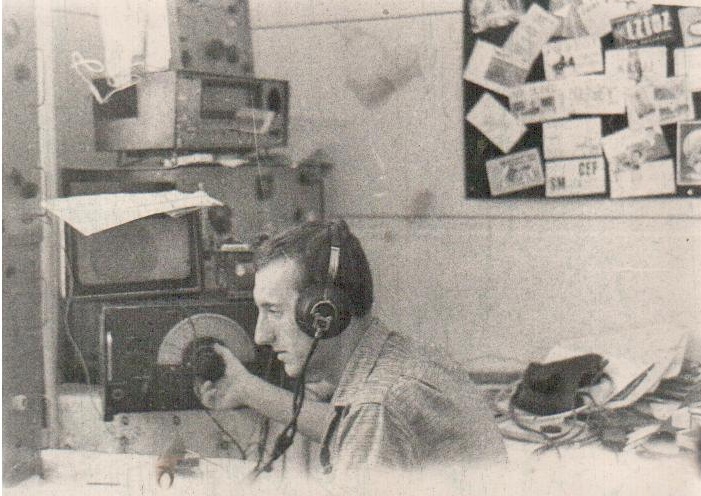
Hristo Tsenev arrives from Svishtov region: “Well, who is this Boncho of yours that I constantly listen to in Dekov?” Hristo graduated from the commercial academy in Svishtov in 1953 and when he had to do the mandatory internship, he indicated Turnovo. And after the internship at DSK he stayed in Turnovo forever. Here is what he says: “I have been a radio amateur since 1950 and I had a linear receiver on which I enjoyed listening to the work of LZ2KAC, sometimes Kiril, sometimes Trifon, sometimes Boncho and I decided: only Tarnovo, that’s where people work”. He helps in the work of the HF section of the club, is the deputy head of the radio station and a permanent member of the club council. Since 1958 he has been broadcasting with his initials LZ2AA with a 50 watt transmitter that he built himself.
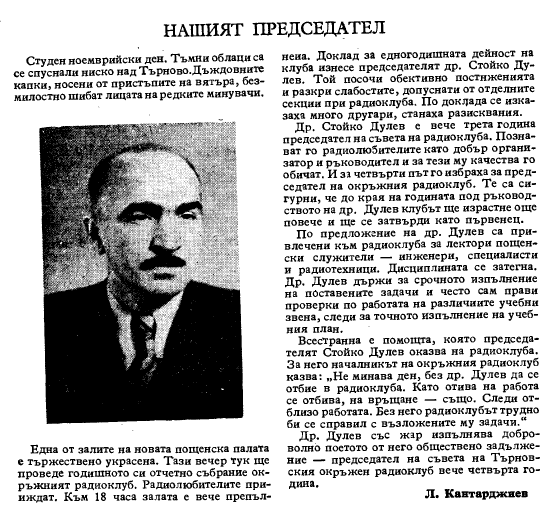
We should not miss the name of Stoyko Dulev, who in 1954 became chairman of the club council. He is a little older /born in 1914/ from Lovech, head of the District Post Office. Morning and evening he visits the club – encourages successes with kind words and criticizes failures with a light remark. A remarkable tactician in human relations – he led the club in the best way and success was not long in coming: from 1955 to 1957 the Tarnovo club was the leader in the country in reporting the activities of the clubs to the Central Committee of the Bulgarian Youth Union.
During this period, both young and old worked diligently in the club, constantly increasing and consolidating their knowledge. At the end of 1955, Kiril Nestorov took the exam for class “A” and passed it with honors. Pencho Penchev /LZ2AC sk/ and the students Todor Kolarov and Mihail Bozgunov /LZ2BK sk – ex LZ2LZ, ex LZ1LZ / also passed the exam for class “B” with honors.
RADIO DESIGN
It is difficult to speak of an established beginning for the radio design activity of radio clubs, circles and radio engineering courses. The first buzzers, detector receivers, then linear and receivers specifically for the amateur radio ranges for listening activities, the first transmitters until the first transmitter of LZ2KAC was built – this is a long way in the difficult conditions of lack of materials, but very strong enthusiasm of the young radio engineers dreaming of becoming engineers in this direction. In addition to the “old” in the club, the very young 15-16 year old Todor Kolarov and Nikolay Yordanov already have 2-3 years of experience in technology and have made several designs of buzzers, receivers.
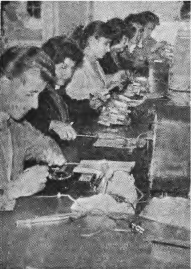
Indicative of the creative activity of the designers is the second regional radio exhibition held in the spring of 1954. A well-decorated hall, a portrait of A.S. POPOV and constructions made by radio amateurs: A complex combined device made by Hristo Nenov, a worker from the DIP “Vasil Kolarov” Gabrovo. In a carefully crafted box, he has built a concert receiver, an oscillator, a tube high-frequency generator with Morse code and modulator, a portable tube meter and output meter. Boncho Vassilev and Marin Slavchev have made a powerful 60-watt amplifier, and B. Vassilev also presents a VHF transmitter. Kiril Nestorov presents his carefully prepared board-teaching aid for a 4-tube receiver. Borislav Aleksiev from Gabrovo has also made a four-tube super. The student Todor Kolarov presents his receiver for amateur ranges. The other student N. Yordanov presents his automatic Morse code.
In 1956, 8 new radio stations were opened in the district: LZ2KAV in Dryanovo with Iliya Penev in charge, LZ2KHN in Sevlievo with Andrey Andreev in charge, LZ2KAE in Elena with Petko Petkov in charge, LZ2KAJ in Tryavna with Bonka Koleva in charge, LZ2KBA- with Kiril Nestorov in charge and LZ2KBS with Siika Yancheva in charge in Tarnovo, LZ2KAD with Trifon Kolev in charge and LZ2KWD in Gabrovo. The transmitters of these radio stations were built in the district radio club in Tarnovo, by the team of the design section under the expert guidance of Boncho Vassilev. A total of 13 transmitters were made in 1955/1956 and were distributed to the clubs. In addition to the above-mentioned beneficiaries, LZ2KAL village of Alekovo, LZ2KSQ – Svishtov, LZ2KBK Pavlikeni were also beneficiaries. The amateur radio club LZ2KAV at the “Andrei Zhdanov” wagon factory assisted in the production of the chassis and front panels of the transmitters. The factory management gave the green light for these developments. The transmitters are similar externally, but have differences inside, mostly in the final stage depending on what lamps were available and what class /”B” or “C”/ station the transmitter is for. And the receivers used were scrapped by the army – mostly German, with which the BA was armed during the Tsarist era. When replaced with Soviet, the obsolete equipment, transmitters and receivers, were provided to the radio clubs. Also, the communication equipment from TABSO, which was brought out for use, was provided to the clubs.
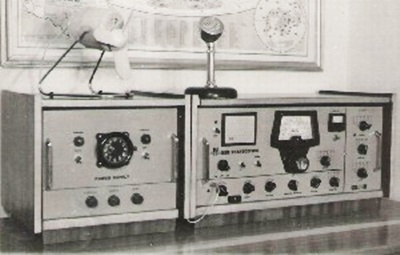
In 1956/57, the construction of a powerful final stage for the radio station of the district radio club began – the amplifier has a final tube GU-80-500 w, and has replaceable coils for the range – probably due to the lack of a suitable switch at the time.
LZ3CQ : “Initially, the final stage was made by someone with a large lamp with a round bulb, but it did not give much power and did not work on the shorter wavelength ranges. In the spring of 1957, Nikolay Pisarov and I had transferred from the Pioneer Palace-LZ2KBS to the city radio club-LZ2KAC and we started competing in the republican championships. I do not remember who brought the GU-80 and of course we immediately started planning how we would put this lamp in the final stage. The two of us, with the help of Boncho Vassilev and Kiril Nestorov, managed to find a way and put the lamp in the stage. The big problem was finding a good switch (some bakelite or textolite ones kept appearing) and we decided to put a replaceable coil. rnThe stage started, started to adjust and with its help we reached the title of master of sports. rnI remember stage until 1961, when I graduated from high school and left the city. rnLZ3CQ ”
This transmitter with GU80 continued to exist until about 1970 – the interesting thing is that the permit was for 980 watts of direct current power in the final stage. /info from LZ2SA/
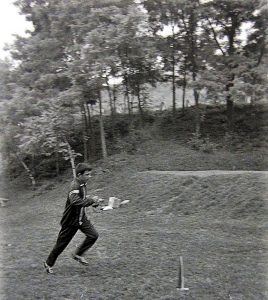
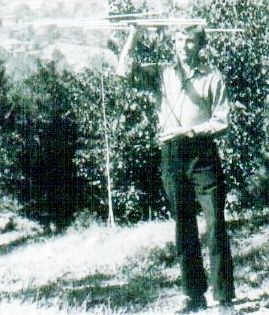
In parallel with the manufacture of transmitters, receivers and transmitters for “fox hunting” for 3.5 MHz are also being made – the two-meter range is also being mastered.
YL and XYL in the club
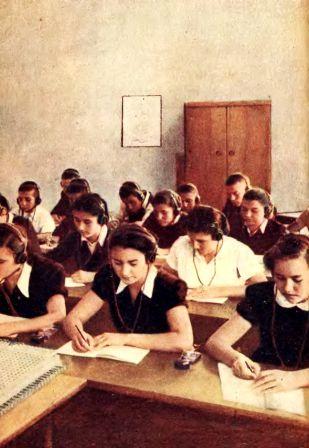
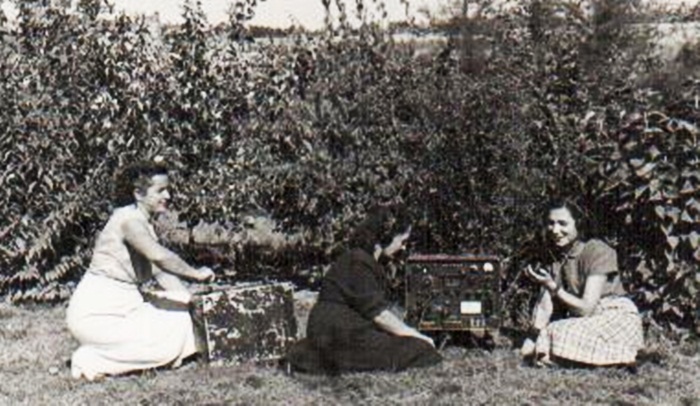
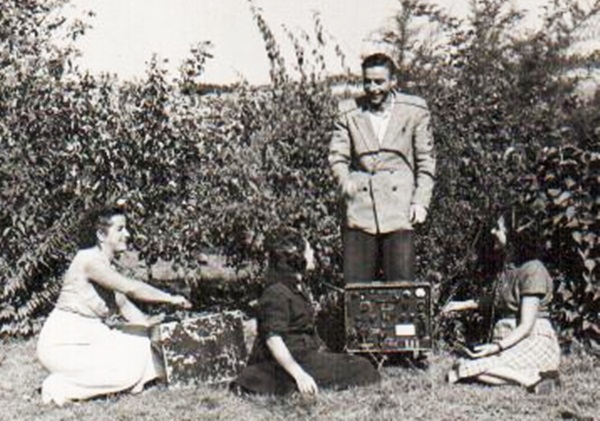
From the very beginning of the club, women and girls were involved in studying radio communications. They learned Morse code, studied radio engineering.

Jubilee initials:
LZ9CWY – IX WORLD YOUTH FESTIVAL – SOFIA 1968
LZ13CWT
LZ40KBA