For Friends and Beer… How to Build an All-Band TV Antenna
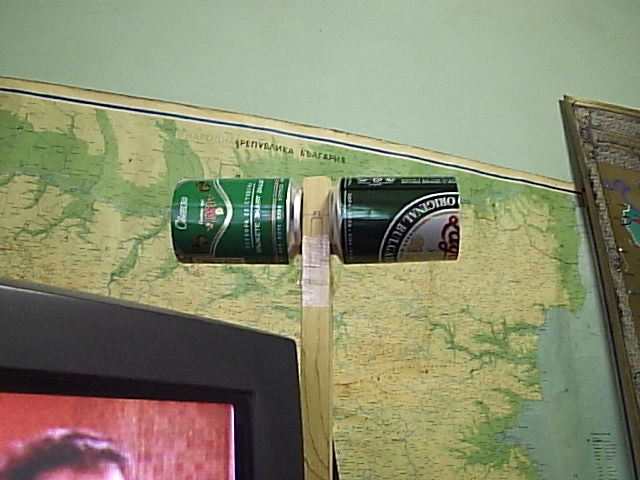
Photo 1: General view of the completed beer can antenna without decorative fluff
Many TV viewers encounter the issue of tuning in one channel perfectly, only to lose all the others from the exact same position.
1. In the Beginning, There Was Beer…
It started like all great projects — over drinks at the table!
My friend Anton (LZ3AI) got an antenna schematic from some old-timers and built a version for an elderly neighbor who was hooked on soap operas after her cable was cut off.
However, when the grandmother saw the antenna, she refused to put „ugly tin tomato cans“ on her balcony, even if they worked. So I stepped in, recalculated the geometry, and spent six months testing empty beer cans. The optimal element length turned out to be exactly 9 cm (not 8, 10, or 13 cm!).
2. Postulates and Technical Concept
To avoid accusations of reinventing physics, I hereby state the following rules:
- Nothing new under the sun since 1888–1900. Reference Hertz, Popov, and Marconi. (Granted, they didn’t fiddle with UHF…).
- I built upon theories established by engineers working within 3 km of the highway roundabout in Sofia.
- Everything written here could be explained by 1/8 of the population (according to my wife!).
Antenna Philosophy: A 2 x λ/4 volumetric dipole with a resonant frequency around 620–630 MHz, offering a wide bandwidth from 500 to 750 MHz. The volumetric surface of a beer can yields superior gain compared to thin wire elements.
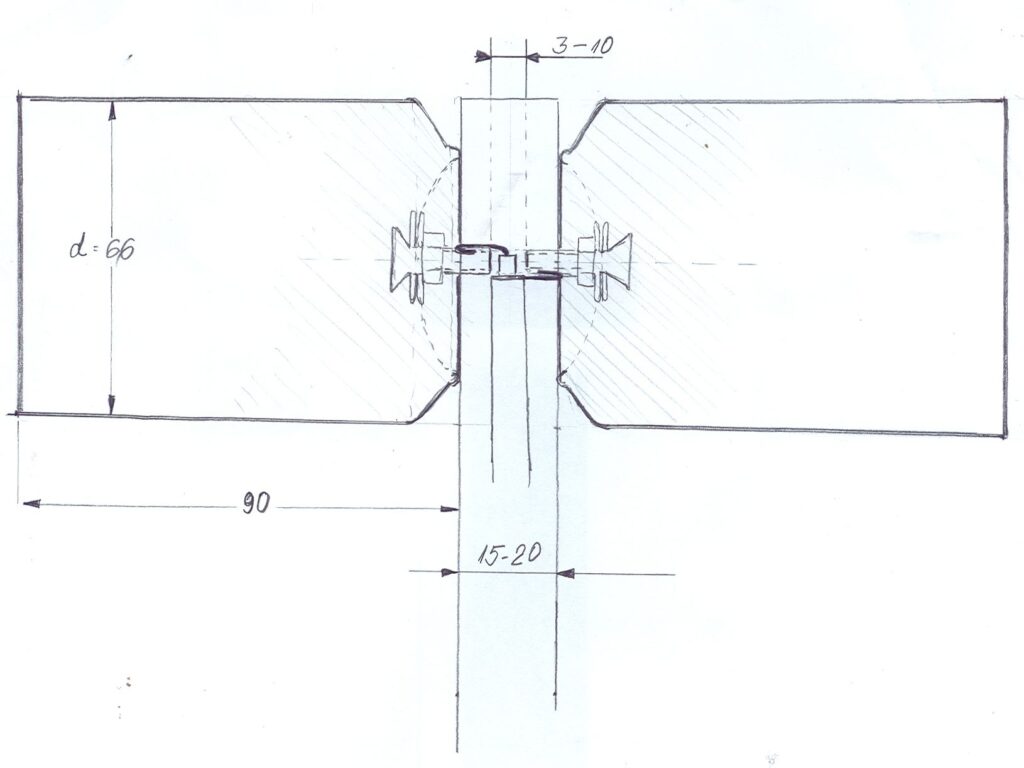
Figure 1: Technical drawing with exact dimensions and geometry
3. Regional Field Tests and Curvature Data
- Sofia (Ovcha Kupel): All major TV broadcasts received crystal-clear from Kopitoto tower.
- Sofia (Mladost): In a blocked location, using a 35-meter coaxial line (75 Ω) to the roof, a 14-inch Funai TV from 1995 produced a flawless picture.
- Gorni Dabnik Village (83 km from Mt. Botev): Excellent reception, including a low-power 10 W transmitter behind a 2-meter terrain hump!
Table 1: Earth curvature chord elevations between two points.
| Distance [km] | Chord Height [m] |
|---|---|
| 10 | 2.0 |
| 20 | 7.8 |
| 30 | 17.6 |
| 40 | 31.0 |
| 50 | 49.7 |
| 100 | 196.0 |
| 150 | 442.0 |
| 200 | 784.5 |
4. Step-by-Step Build Guide
Pour yourself a drink first — patience is key!
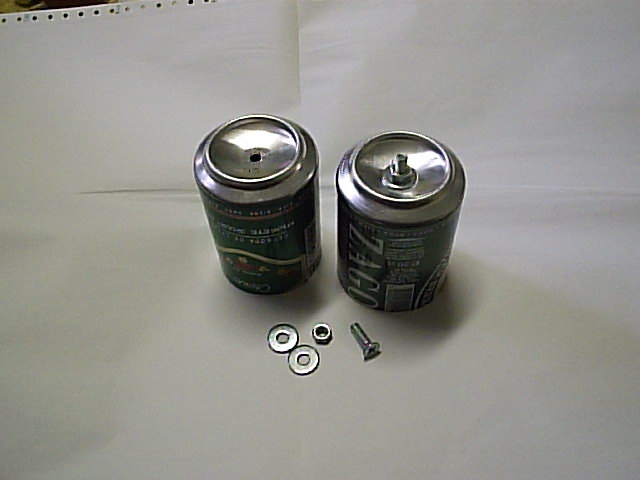
Photo 2: Two empty beer cans ready for cutting
Required Materials: 2 empty aluminum beer cans, 2 M6 15mm screws with nuts/washers, a wooden stick (15×15 mm), a drill, and scissors.
- Measure and mark the cans at exactly 90 mm height from the base. Cut carefully. Fold 0.5 cm of the top edge inward with pliers so you don’t cut your fingers while changing channels!
- Drill a 6 mm hole through the bottom of each can and tighten the screw firmly with washers.
- Drill a 5.5 mm cross-hole through the wooden stick.
- Insert the stripped center conductor and braid of the 75-ohm coaxial cable into the hole, then thread the screws from the cans directly into the wood. Secure the cable with tape.
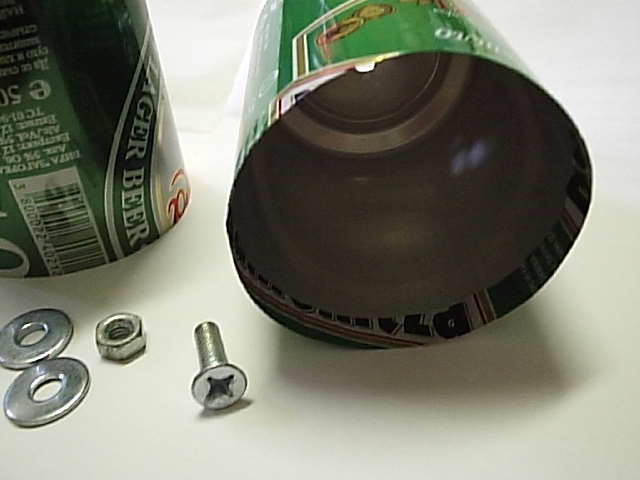
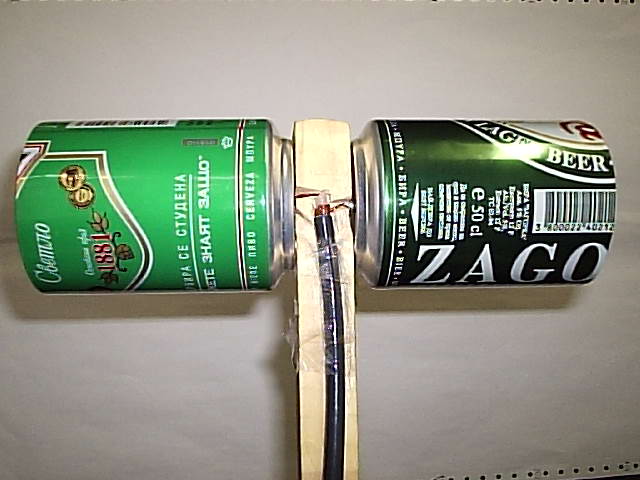
Left: Folding can edges. Right: Mounting and taping coaxial cable to the wooden stick
Conclusion
Coca-Cola and Fanta cans share the same dimensions, but are not recommended! Nobody throws a party with soda. Men know why!

Svetoslav Stoyanov (LZ5UG)
Archived Reader Comments
- Uncle Svetlo: Unlocked unamplified TV reception in impossible spots like Padesh and Kremenik villages.
- Tihomir & Ivan Staykov: Cheers for the satellite contacts and R-440-U stations! Our antenna was bigger anyway!
- Petar: Why didn’t the Japanese align the spiral intersection points dead-center?
- Uncle Svetlo: Beats me, man!