A Real Radio-Ham
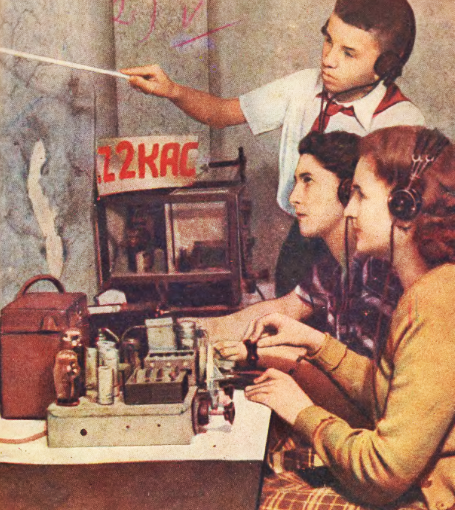
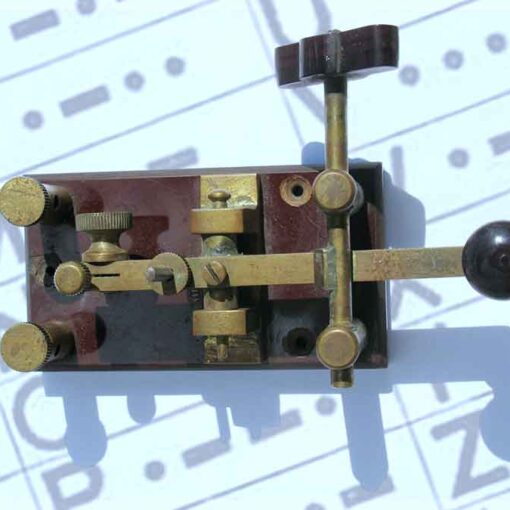
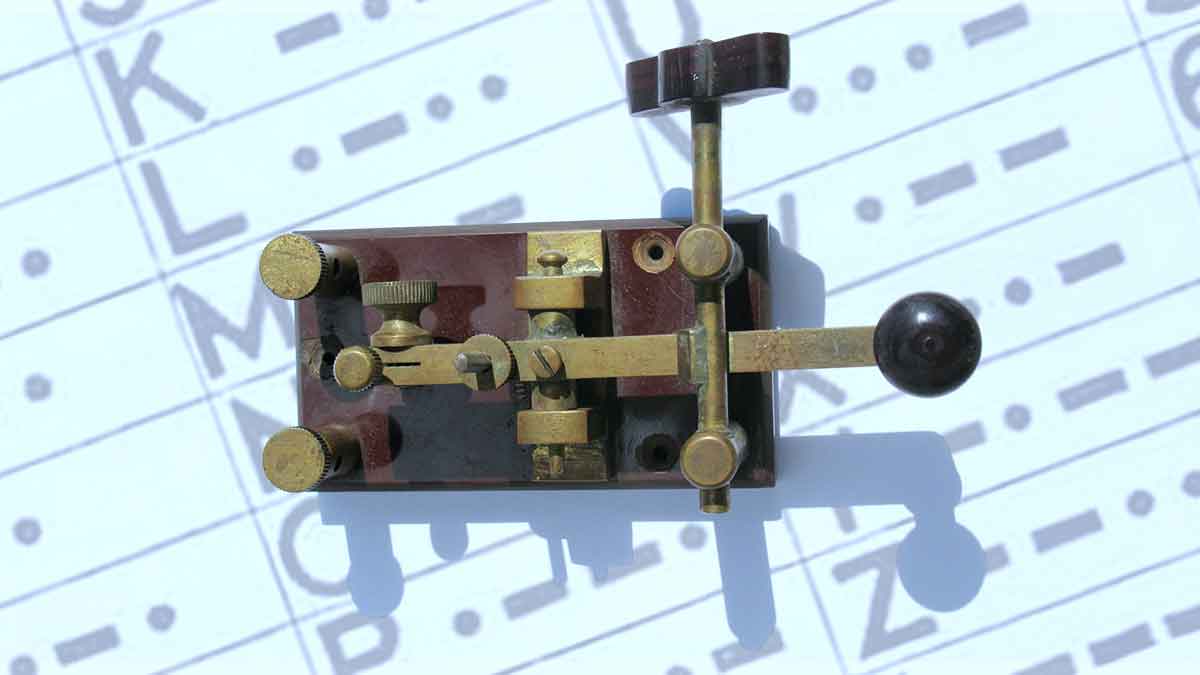
YORDAN GAYDAROV: I was in eighth grade when a girl came to enroll in a radiotelegraphy course. I had heard about Morse code and had even listened to telegraph signals when I was „walking“ on the short waves of our home radio. They enrolled me almost by force and I went to the first meeting, driven more by curiosity. The radio room was located in the center of G. Oryahovitsa, in a former store and was equipped with 4 long tables, a dozen Morse keys and a buzzer. Our instructor was Petko Nikolov – a radio operator in the then TABSO. I was not particularly impressed by the first lesson, but gradually I got carried away and began to quickly master the material. I was the youngest in the course, but I progressed the fastest. This impressed Nikolov and he praised me for being very musical. Everyone laughed out loud because they knew I played the violin. Nikolov encouraged me and sometimes took extra care of me. Later he started taking me to the club radio station and showing me how to make radio connections.
Of course, I was far from being able to work the radio station myself. I remember that it was located in the attic of the DOSO building. The transmitter was 25 watts and a „Windom“ antenna. I can’t remember what the receiver was like, but I remember that it only received telegraphy.
We were terribly jealous of LZ2KBA, because he broadcasts with a „whole“ 50 watts.
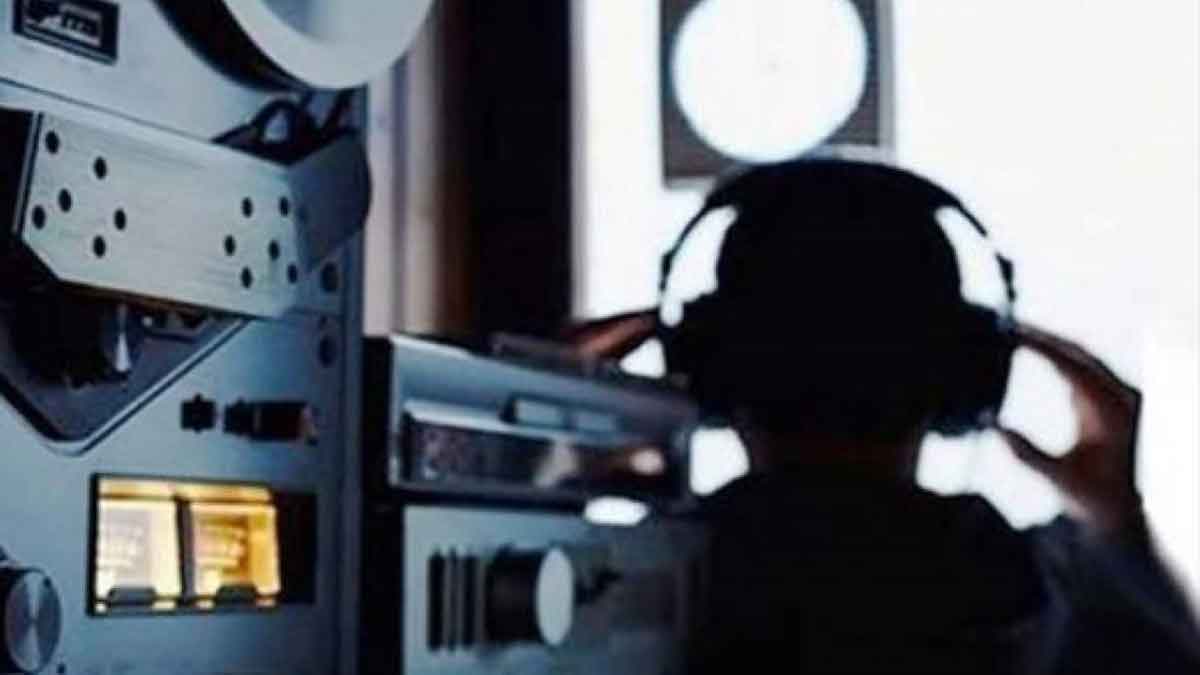
I put on my headphones and immersed myself in the vast air. Petko, on the other hand, explained to me in detail what he was receiving and what he was transmitting. He also began to introduce me to the codes and abbreviations. When I finished the course and could already receive and transmit about 80 characters per minute, he suggested that I make occasional radio connections on telegraphy. At that time, we were not working on AM. And since I did not yet have a „C“ class, and the rules were very strict, I made radio connections using his name, in his presence, of course.
In the tenth grade, I was accepted into the motor flying course and I left amateur radio behind, which I regret. I did not become a pilot, but I fell seriously behind in amateur radio activities. That is why, when my family moved to Dimitrovgrad, I immediately looked for a radio club. Its head turned out to be a young and very nice man Mladen LZ2MC /sk/ and he welcomed me into the team.
Luckily for me, the club had an automatic machine and I started to train hard. After a few months, I was receiving 100 characters per minute.
During that time, I worked on the club radio station LZ1KRA. I took the „C“ class exam and after passing it successfully, I started working completely legally.
When I entered the barracks, it turned out that I was the best radio operator in the unit and they immediately included me in the duty calculations.
Here I will open a parenthesis and admit that from time to time I allowed myself to make a connection on 3.5 megahertz under the initials LZ1KDG, the last letters of which corresponded to my name.
After my family moved to live in Lyaskovets, I was happy to find out that a radio club had been founded there, which I quickly opened and started working on LZ2KLC. My appearance was warmly received, since the station was left without operators. Before me, Dimitar Staykov LZ1FO, who at that time was a soldier in G. Oryahovitsa, had worked there from time to time.
The transmitter was the work of radio technician Stoyan Zlatev and worked with a GU-50 end lamp. We used a „Long Wire“ antenna with a length of about 80 meters, attached at one end to the dome of the church. And I still can’t explain how the priest allowed this to happen. With this antenna we could hear each other quite well around the country and the world. Another question is what harmonics we „sowed“ around, and who had heard of KSR back then?
The receiver was Russian /I don’t remember which one/ with a second oscillator grafted to it so that we could receive telegraphy. We worked actively in this type and even allowed ourselves to participate in domestic and international competitions.
At the republican championship held in 1966, we first moved to the plateau above Lyaskovets and positioned ourselves next to the then television repeater from which we got electricity. We stretched out a G5RV antenna and started the tests. It turned out that we could hear each other perfectly all over the country. And after the competition it became clear that we had placed third, which was a great success for us.
I was sitting on a box instead of a chair and I remember that at the end of the competition I realized that I could not get up from my seat.
The head of the radio club in G. Oryahovitsa was a former military man, who with his inadequate orders managed to drive away the best operators of LZ2KAF. As a result, Stefan Krastev LZ2DB, Todor Papazov LZ1WR, Pavlina Dzhipova joined LZ2KLC. Three girls from Lyaskovets also came: Pepa, Dora and Elena and this is how the new team was formed, and I was appointed as the manager. I can definitely say that in this composition we were one of the most active amateur radio stations in the country.
In the meantime, I was accepted as a student at the University of Veliko Tarnovo and since I lived mainly in Veliko Tarnovo, I joined the LZ2KBA team. At that time, the head of the radio club was Hristo Devdzhiev, and later Ivan Popov LZ2SA.
The material base of LZ2KBA was significantly better, and there was also a good operator team. More active sports and competitive activities were taking place. The more powerful 1-kilowatt transmitter also contributed to this. But even there we used a mediocre „Windom“ antenna and it created a lot of interference to the television and the People’s Army House.
During contests, I always worked on LZ2KLC, and the operators Nikolay Pisarov LZ2JF and Angel Lichev LZ2UG remained on LZ2KBA. During the rest of the time, I also worked actively on LZ2KLC. In 1971 I started working at Radio Stara Zagora and joined the team of LZ1KSZ, and later LZ1KWT. In 1988 I received permission to work on my own radio station with the initials LZ1UC.